Is Kitt Peak Worth Visiting?
A 90-minute drive for a mountain of telescopes — the honest verdict: who the night programs reward, who should go in daylight instead, and who should skip it.
The honest frame first: Kitt Peak is not an attraction that happens to have telescopes — it is a working national observatory that happens to let you in. More than twenty research telescopes crowd a 6,880-foot summit leased from the Tohono O’odham Nation since 1958, and the public programs are run by the observatory itself, not a tour operator. That changes what “worth it” means: you are buying access to a real scientific mountain, with real-science rules attached.
What the mountain actually delivers
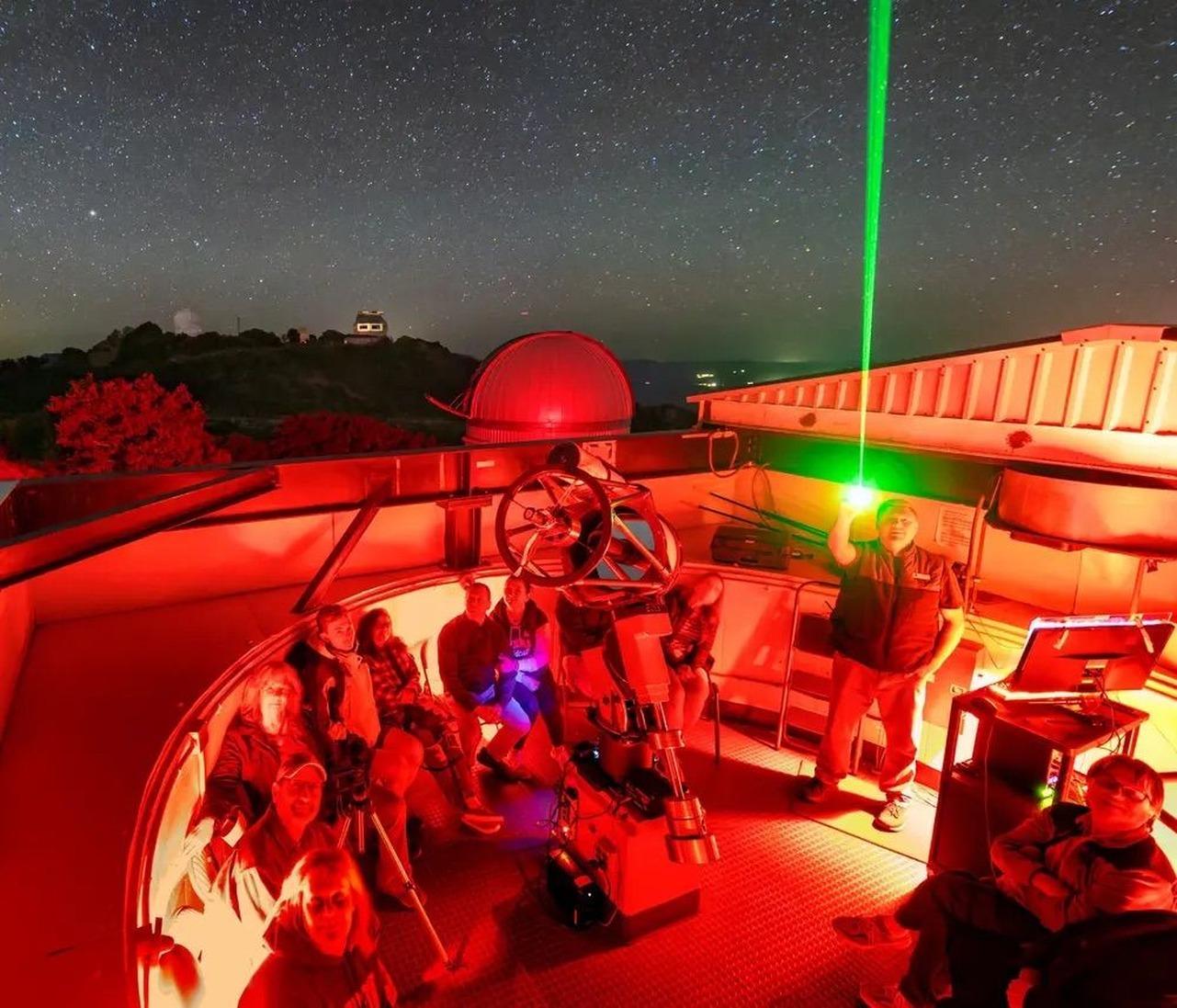
At night, some of the darkest accessible sky in the United States — protected not by luck but by law, because Tucson passed the world’s first light-pollution ordinance back in 1972 precisely to keep this mountain dark. The Nightly Observing Program ($79) is the flagship: a light meal, the exhibits, then docent-led viewing through the Visitor Center’s own telescopes under strict lighting control. It runs nightly, year-round, and it is the only legal way to be on the summit after 4:00 pm.
By day, the summit is a different product: a free-to-enter Visitor Center (open 9:00 am to 4:00 pm, seven days), a paved drive with Sonoran desert views, and a one-hour docent tour that takes you inside a working research telescope for $24.95 — with children under 13 free on the combo tour. In summer the altitude is the point: the summit runs 15–20°F cooler than Tucson.
Skip it (honestly) if…
- You want a planetarium, not a mountain. The drive is around 90 minutes each way from Tucson and the programs are real astronomy at real astronomy pace. If you want a domed show and air conditioning, Tucson’s in-town science center is the better evening.
- You’re traveling with under-8s and only have the evening. Night programs don’t admit children under 8 — the family route is the daytime tour, where under-13s ride free.
- Mobility is a constraint and you haven’t checked the program. The Nightly Observing Program is ADA accessible with elevator access; Dark Sky Discovery and the daytime telescope walks are not. Book the one that fits — the details are in the night-program chooser.
- The forecast is a wall of cloud. The sky is the product. The observatory itself checks the weather and confirms programs at noon; our homepage verdict bar reads the summit’s cloud cover live, and free cancellation to 24 hours exists for exactly this.
Go — even alone — if…
- You have never seen the Milky Way properly. From spring to early fall the core rises over a summit where lighting discipline is enforced like the scientific instrument it is.
- You care about the machines. This is the mountain of the Mayall 4-meter and, for half a century, the McMath–Pierce — the world’s largest solar telescope until its 2017 decommissioning. The daytime tour walks you into that history.
- It’s August and you have children melting in Tucson. A 20-degree temperature drop, a science center, and a free child’s ticket is the quietly great family half-day. The daytime guide has the play.
The verdict, compressed
Night person with a clear forecast: book the program — it is the whole point of the mountain. Family or daylight visitor: the $24.95 tour and the drive. Cloud on the horizon: wait for the noon call, and let free cancellation do its job. And if you’re weighing all of Tucson’s sky options first, tucsonobservatory.com puts Kitt Peak beside Mount Lemmon SkyCenter and the in-town planetarium with prices for each.
Nightly Observing Program
Telescope viewing after dark with a docent — the only way onto the summit after 4:00 pm.
Check availabilityDaytime guided tour
Inside a working research telescope, 15–20°F cooler than Tucson.
Book the day tourPrices from our August 2026 data check; the operators adjust seasonally — treat them as the shape of the menu, not a quote.
Can't Make These Dates?
Browse More Available Options
Find a tour that fits your schedule — all with instant confirmation and free cancellation.
A note on the missing star-ratings
The bookable listings on this site show no review scores yet, and the reason is worth a sentence of honesty: the observatory’s programs are newly listed on GetYourGuide, so the counter starts at zero — while the programs themselves have been running for decades under one of astronomy’s most famous names. We could have dressed the pages up with borrowed praise; instead, the trust signal here is the provider line on every listing: Activity provider: Kitt Peak National Observatory. You are buying from the mountain, through a marketplace, with free cancellation — the marketplace’s review counter will catch up.
Where it sits among Tucson’s sky options
Ranked honestly against its neighbours: the 9,000-foot alternative up the Catalina Highway offers a bigger public telescope but a seasonal, 28-seat program that sells on its own site; the in-town planetarium is the air-conditioned, small-children answer at a fraction of the price; and the free option — driving out to genuinely dark desert — costs nothing and teaches nothing. Kitt Peak’s card is the combination no neighbour matches: a working national observatory that runs its own public program nightly, year-round, bookable with free cancellation. For the one astronomy night of a Tucson trip, that reliability is usually the decider.
Book a Kitt Peak Night
The observatory's own Nightly Observing Program — $79 with a light meal, telescope viewing and free cancellation to 24 hours. Checked and confirmed by the observatory at noon on the day.
Check Availability