Kitt Peak Night Programs, Compared
Four official night programs from $59 to $109: the flagship NOP, the premium Dark Sky Discovery, the binocular-led Astro 101, and the full-moon special — which night is yours?
Four programs, one mountain, and a genuinely different night depending on which you book. All four are operated by Kitt Peak National Observatory itself — same docents, same lighting discipline, same noon weather call — so the choice is about format and depth, not quality tiers. Here is the chooser nobody publishes.
The four nights
Nightly Observing Program (NOP) — $79. The flagship, and the one that runs nightly, year-round. Light meal, exhibits, then guided telescope and binocular viewing. It is also the accessible one: ADA accessible with elevator access to the observatory level. First-timers should start here — it is the program the mountain built its public reputation on.
Dark Sky Discovery (DSD) — $109. The premium, smaller-format night for people who want longer at the eyepiece and a deeper sky program. The trade: it involves real walking between telescopes and stairs, and is not accessible for mobility-impaired visitors.
Astro 101 — $59. The budget ticket and the sleeper pick: a binocular-led tour of the night sky that teaches you to navigate it yourself — arguably the most transferable souvenir on the menu. Same meal-cutoff rule as the others: book by 1:30 pm to eat.
Magnificent Moon (MM) — $109. The honest answer to bright-moon nights: when the moon washes out the deep sky, the observatory points the program AT the moon instead. If your only free night lands near full moon, this is the program that turns the handicap into the show.
Nightly Observing Program
Meal, exhibits, telescope time — the flagship format the mountain is known for.
Check availabilityDark Sky Discovery
Longer at the eyepiece, deeper program — bring legs for stairs and distances.
See the programAstro 101
Learn to navigate the night sky yourself — the skill travels home with you.
See the programPrices from our August 2026 data check; the operators adjust seasonally — treat them as the shape of the menu, not a quote.
The rules all four share
- Under-8s can’t join — night programs run late, cold and dark. The family answer is the daytime tour, where under-13s go free on the combo.
- The noon call. The observatory checks weather and confirms each program at noon on the day. Pair that with free cancellation to 24 hours and the strategy writes itself: book the promising night, keep an eye on the summit’s sky, adjust free.
- Lighting control is strict and departure is together — guests may not leave early except in emergencies, because headlights on the summit road are contamination to live instruments. Plan the babysitter accordingly.
- Dress for 6,880 feet. The observatory’s own packing list: warm layers, jacket, long pants, closed-toe shoes — even in summer.
Full-moon week and none of these fit? Tucson’s wider menu — the in-town planetarium evening, the 9,000-foot alternative up the Catalinas — is laid out by tucsonobservatory.com, which prices all of the region’s public astronomy against each other.
How to pick your night
The calendar matters more than the program menu. Moon first: in the dark half of the lunar month, NOP, DSD and Astro 101 show you the deep sky at full strength; in the bright half, Magnificent Moon is not a consolation prize but the correct tool. Season second: the galactic core rides highest from late spring to early fall, while winter trades the Milky Way for steadier air and longer darkness — there is no wrong season, only different shows. Booking third: reserve the promising night one or two days out (before 1:30 pm on the day if you want the meal), and let the observatory’s noon call plus free cancellation absorb the weather risk.
What the night actually feels like
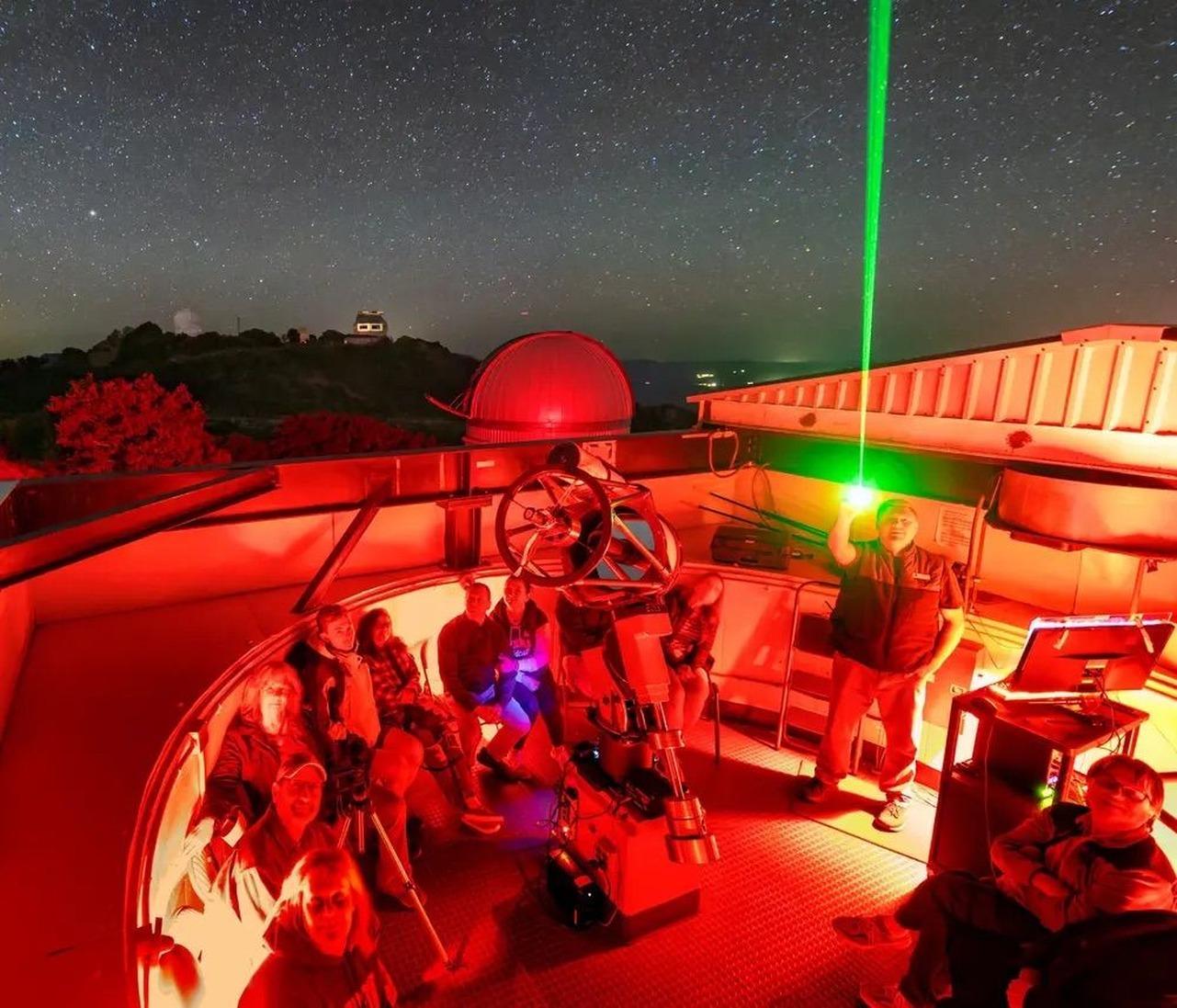
Worth knowing before you dress: after sunset the program runs under red-light discipline — white phone screens are the enemy — and your eyes take a genuine half hour to fully dark-adapt, which is why the format front-loads dinner and exhibits while the light dies. It is colder than you believe at 6,880 feet, stiller than a city dweller expects, and the moment the docent swings the telescope onto a globular cluster tends to convert even the dragged-along spouse. Plan the drive so you arrive relaxed: the road guide has the checkpoint and timing math.
Can't Make These Dates?
Browse More Available Options
Find a tour that fits your schedule — all with instant confirmation and free cancellation.
Book a Kitt Peak Night
The observatory's own Nightly Observing Program — $79 with a light meal, telescope viewing and free cancellation to 24 hours. Checked and confirmed by the observatory at noon on the day.
Check Availability